

Overworking is often associated with ambition, commitment and professional success. However, people work excessive hours for many different reasons, and not all of them are positive. Some motivations are linked to personal fulfilment and career development, while others may reflect insecurity, financial pressure or difficulties maintaining a healthy work-life balance.
Understanding why people overwork is important for employees, managers and organisations alike. Identifying the underlying motivations can help individuals make more informed decisions about their careers and recognise when long working hours are contributing to professional growth or becoming detrimental to wellbeing.
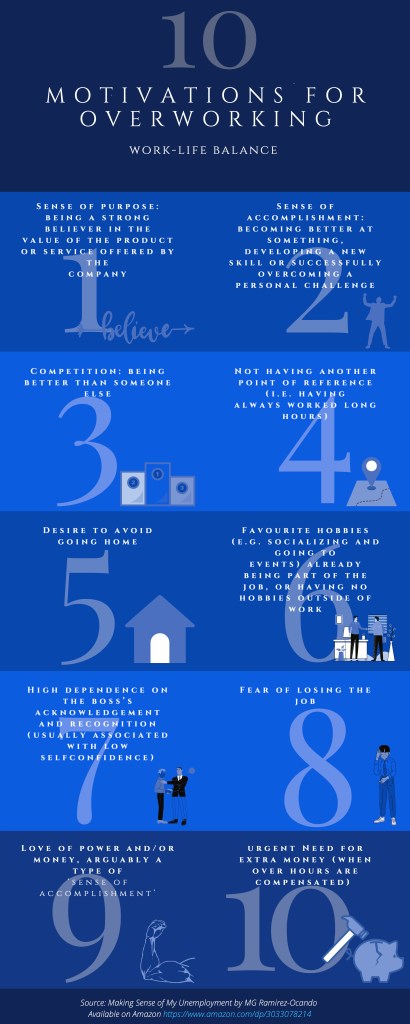
The infographic below summarises ten common motivations for overworking, based on themes explored in Making Sense of My Unemployment.
Key Findings
The infographic identifies ten motivations that may contribute to excessive working hours:
- A strong sense of purpose and belief in the organisation’s mission.
- Personal accomplishment and skill development.
- Competition with colleagues or peers.
- Lack of an alternative point of reference for healthy working patterns.
- Avoiding personal situations outside work.
- Social activities and friendships centred on the workplace.
- Dependence on recognition and approval from managers.
- Fear of losing employment.
- Desire for power, status or financial success.
- Immediate financial incentives such as overtime compensation.
Work-life balance, career development and the relationship between employment and personal identity are explored further in Making Sense of My Unemployment.
Link to book: https://www.amazon.com/dp/3033078214

